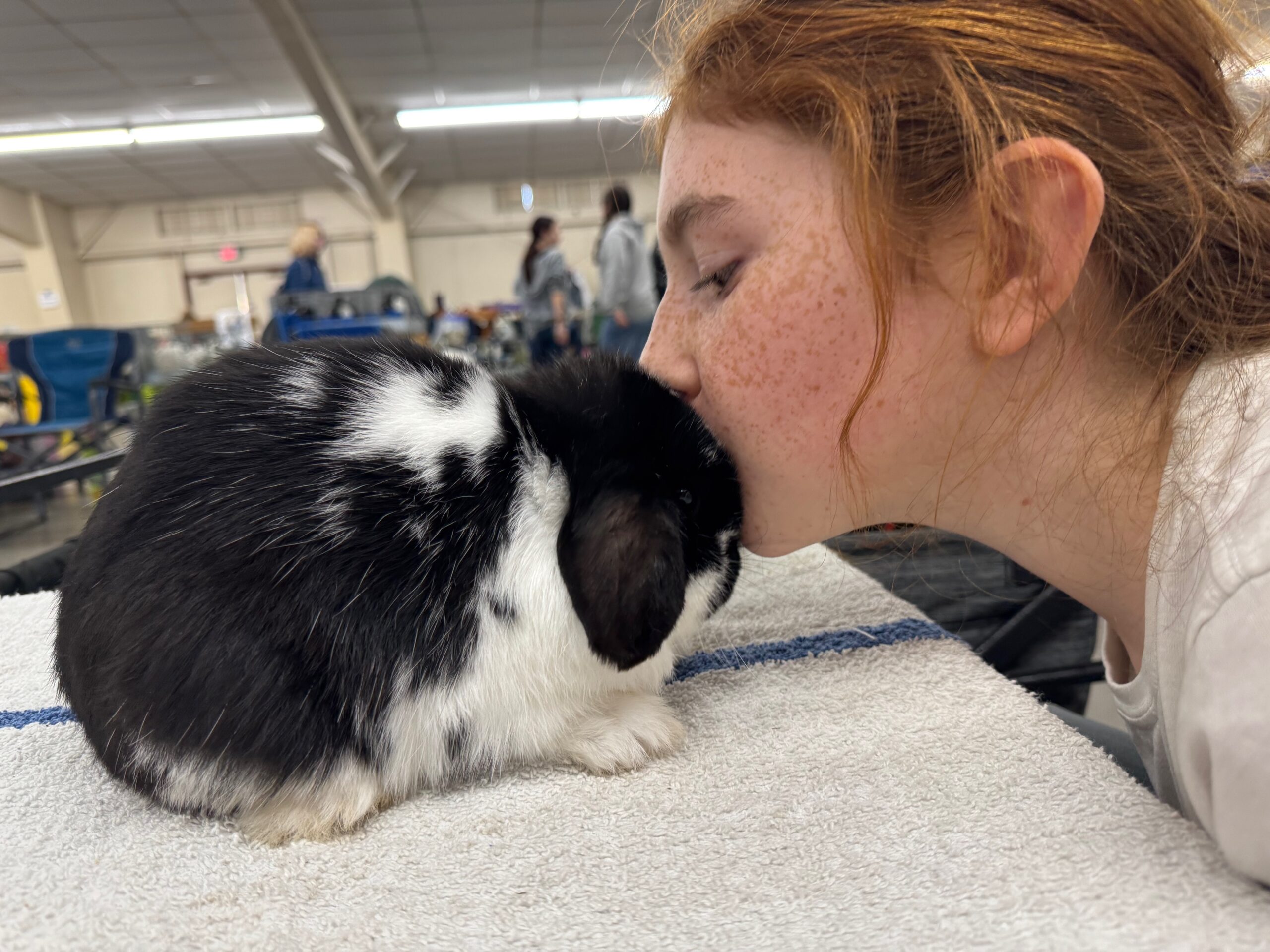
A quick reference for new rabbit owners — what to feed, what to avoid, and the essentials for keeping a Holland Lop happy and healthy.
Download as PDF ↓Daily Pellets
Pellets are the main part of our rabbits’ diets. We measure them carefully and don’t overfeed. A good starting point is about 1/4 cup in the morning and 1/4 cup at night, but every rabbit is different. We feed our animals as little as 1/3 cup per day to make sure they don’t become overweight. Watch body condition and dial the amount back if your rabbit starts gaining weight (you should be able to feel, but not see, the ribs and spine). Choose a plain timothy-based pellet, and skip mixes with seeds, nuts or dried corn.
Unlimited Hay
Hay is just as important and should always be available. It keeps fiber moving through the GI tract and helps keep their teeth worn down. Alfalfa is high in calcium and should only be given to rabbits over 6 months in moderation, not as their main hay.
Good — Feed Freely
- Timothy hay
- Orchard grass
- Oat hay
- Meadow / mixed grass hay
- Botanical hay blends
Use Sparingly / Avoid
- Alfalfa as a daily staple for adults — too high in calcium/protein (fine for babies, pregnant/nursing does, or as an occasional treat)
- Straw — not the same as hay; almost no nutrition, bedding only
- Dusty, moldy, or musty-smelling hay of any kind
Keep the Space Clean
Urine breaks down into ammonia fairly quickly. A build-up irritates the eyes and respiratory tract and can lead to respiratory infections and sore hocks. Spot-clean litter/bedding daily and do a full cage/enclosure clean weekly (more often in warm weather).
Treats
Sugary treats — fruit, store-bought yogurt drops, cereal-type treats — aren’t dangerous in small amounts, but sugar disrupts gut bacteria if overdone. A small piece of apple or banana are easy go-to treats. Moderation only, up to 1 tablespoon of fresh fruit total per 5 lbs of body weight, 1–2 times a week. Plain Cheerios or shredded wheat (no sugar or frosting) are also fine as an occasional treat, same small quantities. Skip chocolate, candy, bread, crackers, sugary cereal, nuts, seeds, and anything high in fat or starch.
Safe Fruit — Occasional Treat
- Apple — 1 small cube, seeds removed (seeds are toxic)
- Banana — 1–2 thin (about 1/4-inch) slices; very sugary, go easy
- Strawberry — half a berry
- Blueberries or raspberries — 2–3 berries
- Pear — small slice, no seeds
- Papaya or pineapple — small cube, occasional
Avoid
- Dried fruit (raisins, etc.) — sugar is concentrated, easy to overfeed
- Any fruit seeds or pits — apple seeds, cherry/peach/plum pits are toxic
- Avocado — toxic, skip entirely
- Canned fruit or fruit in syrup
Safe Herbs & Vegetables
Safe
- Cilantro, parsley, basil, mint, dill
- Romaine, red/green leaf lettuce, butter lettuce
- Arugula, bok choy, watercress, endive
- Dandelion greens (pesticide-free), carrot tops
- Bell pepper — low sugar, high vitamin C; fine as a regular veggie
- Cucumber (small amounts — mostly water, low nutrition)
- Small bit of carrot or broccoli (treat-like, not daily)
Avoid
- Iceberg lettuce — mostly water, can cause diarrhea
- Onion, garlic, chives, leeks
- Potato & potato leaves/vines, tomato leaves/stems
- Rhubarb, avocado — toxic
- Beans/legumes, mushrooms, corn kernels
Introducing New Treats & Veggies
- Add one new food at a time, in a small piece (about a thumbnail’s worth).
- Wait 24–48 hours, watching stool (size, shape, consistency) and appetite/energy.
- No soft stool or upset? It’s a “safe” food for your rabbit — move on to the next new item.
- Soft stool, diarrhea, or reduced appetite? Remove that food and give the gut time to settle before trying anything else new.
What Can Be Free-Fed Once Introduced
Once a leafy green or herb has been tested with no reaction, it can be offered more generously — a varied mix of 2–3+ safe greens daily, roughly a packed cup per 2 lbs of body weight, is a common target. Sugary treats and fruit stay limited even after they’ve been introduced successfully — the concern there is the sugar itself, not a one-time reaction.
Know Your Rabbit’s Go-To Treats
Once you know which treats your rabbit loves and tolerates well, keep a couple on hand as established go-tos. A known, safe favorite can help tempt an off-food rabbit to start eating again in a health crisis, and Dr. Konrad’s office often asks owners to bring a rabbit’s own comfort foods/treats for after a drop-off appointment — so it’s worth having a couple ready before you need them.
Other Essentials
Handling
Never lift a rabbit by the ears or scruff alone — always support the hindquarters. Their spine is fragile and can fracture if they kick out unsupported.
Teeth
Teeth grow continuously — unlimited hay plus safe wood to gnaw (they’ll chew the bark right off) helps wear them down. Safe wood: apple, willow, aspen/poplar, birch. Toxic: stone-fruit woods (cherry, plum, peach, apricot, nectarine) — avoid entirely, and only use untreated, pesticide-free wood. Drooling or dropped food can signal overgrown teeth — see a vet.
Fresh Water
Available at all times; check the bottle or bowl daily. A rabbit that suddenly stops drinking is also a warning sign.
Temperature
Heatstroke risk rises above ~80°F — provide shade, a frozen water bottle, or a ceramic tile to lie on. They handle cold fairly well but need shelter from drafts and damp.
Spay/Neuter
Usually done around 4–6 months. Reduces territorial/aggressive behavior and greatly lowers cancer risk, especially uterine cancer in unspayed females.
Grooming
Brush weekly (more during shedding “blows”) to prevent fur-blockages from self-grooming. Check nails monthly and trim as needed.
Space Requirements
A single rabbit needs a minimum of about 8 sq ft of continuous living space — enough to take a few hops, stand fully upright, and stretch out flat — plus several hours a day in a larger, bunny-proofed exercise area. Bigger is always better; avoid small pet-store cages as the only housing.
Enrichment
Rabbits are smart and need mental stimulation: chew toys (untreated wood/willow, cardboard), a digging box, tunnels or hideouts, and foraging games like hiding greens or pellets. Rotate toys often and give daily supervised playtime to prevent boredom and destructive chewing.
Cecotropes: Not the Same as Regular Poop
Alongside their regular round, dry pellets, healthy rabbits also produce cecotropes — soft, shiny, dark clusters that look a bit like a tiny bunch of grapes or blackberries, held together in a thin mucus coating. They come from the cecum (the part of the gut that ferments fiber) and are packed with protein, B vitamins, and beneficial bacteria. Rabbits eat cecotropes directly from the source, usually overnight or early morning, to reabsorb those nutrients — this is completely normal, not a sign of illness, and you’ll rarely even see it happen. If they’re regularly mushy and stuck to your rabbit’s hindquarters instead of being eaten, dial back veggies and load up on hay for a few days to help reset the gut. If it’s an ongoing problem despite that, it’s time to check in with your vet.
Find an Exotic Vet Before You Need One
Rabbits need a vet with exotic-animal training, not a standard dog/cat practice. Their digestive system, anesthesia needs, and stress responses are delicate, and a vet unfamiliar with rabbits can miss or worsen a GI stasis emergency. Find and save the contact for a rabbit-savvy exotic vet near you now, before it’s an emergency.
Our vet:
Dr. Hans Konrad — Paso Pet Care
820 6th St, Paso Robles, CA 93446
Phone: (805) 238-1091
Often able to do drop-offs in the morning if you need a next-day appointment.
Watch For: GI Stasis & Other Emergencies
- Not eating, or picking at food
- Little to no fecal pellets, or very small/misshapen ones
- Not drinking normally
- Lethargy, hiding, or a hunched/hunkered posture
- Bloated or gurgly belly, teeth grinding (a sign of pain)
- Diarrhea (true diarrhea, not just soft stool) — also an emergency in rabbits
Rabbits can’t vomit, and their gut needs to keep moving constantly. If a rabbit stops eating or pooping for more than a few hours, treat it as an emergency and call your exotic vet right away — GI stasis can turn fatal within a day or two if untreated.
This sheet is a general starting guide, not veterinary advice — every rabbit is different, so check anything specific to your rabbit’s health with a rabbit-savvy vet.
Leave a Reply